GemKrishna buying guide
Aquarius (Kumbh Rashi) Bracelet: Stones, Meaning, How to Wear and Where to Buy
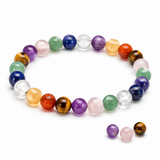
An Aquarius bracelet is a natural crystal bracelet made with stones traditionally associated with Aquarius (Kumbh Rashi). GemKrishna makes two lab-certified versions: a two-stone Amethyst and Lapis Lazuli bracelet at ₹899 with a free raw selenite plate, and a six-stone 8 mm AAA bracelet at ₹1,800. Each comes with its own complimentary lab report.
| Zodiac sign | Aquarius (Western) / Kumbh Rashi (Vedic) |
|---|---|
| Dates | About 20 January – 18 February (Western); about 13 February – 14 March (Vedic, Sun sign) |
| Ruling planet (Vedic) | Saturn (Shani) |
| Element | Air |
| Two-stone version | Amethyst and Lapis Lazuli, ₹899, with free raw selenite plate |
| Six-stone version | Black Onyx, Amethyst, Crystal Quartz, Moonstone, Rhodonite and Yellow Jasper, 8 mm AAA beads, ₹1,800 |
| Lab report | Complimentary one-on-one lab report with a unique report number |
| Traditionally associated with | Clarity, intuition and calm |
Where to buy it
Buy directly from GemKrishna. The price, stock and photos below are live from the product page.


What is a Aquarius bracelet?
A Aquarius bracelet, also called a Kumbh Rashi bracelet, is a bead bracelet made from natural crystals that are traditionally linked with the sign of Aquarius. Aquarius is an air sign ruled by Saturn in Vedic astrology, commonly described as independent, original, humanitarian and forward-thinking.
People wear it for personal meaning, intention-setting, meditation, or as a birthday gift for a Aquarius. These are traditional and spiritual associations. A bracelet does not guarantee any outcome.
Aquarius or Kumbh: which dates?
Western astrology places the Sun in Aquarius from about 20 January – 18 February. Vedic astrology uses the sidereal zodiac, so the Sun is in Kumbh from about 13 February – 14 March. Many Indian buyers go by their Moon sign (Rashi) from their Kundli rather than their Sun sign. Choose the sign you identify with, or ask your astrologer.
Which stones are in the GemKrishna Aquarius bracelets?
Two-stone Aquarius bracelet: Amethyst and Lapis Lazuli
- Amethyst: a purple quartz; traditionally associated with calm, clarity and intuition.
- Lapis Lazuli: a deep blue rock with gold-coloured pyrite flecks; traditionally associated with wisdom, truth and clear communication.
Six-stone Aquarius bracelet (8 mm, AAA)
- Black Onyx: a black chalcedony; traditionally associated with strength, grounding and protection.
- Amethyst: a purple quartz; traditionally associated with calm, clarity and intuition.
- Crystal Quartz: a clear rock crystal (Sphatik); traditionally associated with clarity and with amplifying the stones around it.
- Moonstone: a feldspar with a soft glow (adularescence); traditionally associated with the Moon, intuition and emotional balance.
- Rhodonite: a pink mineral with black veins; traditionally associated with compassion and emotional healing.
- Yellow Jasper: a yellow chalcedony; traditionally associated with optimism and confidence.
Why these stones for Aquarius?
Blue and purple stones are traditionally linked with Saturn. Amethyst and Lapis Lazuli are both associated with clarity and intuition, which suits the thoughtful Aquarius mind. The six-stone version adds Black Onyx for grounding and Crystal Quartz for clarity.
Two-stone or six-stone: which should you buy?
- Choose the two-stone bracelet for a focused Amethyst and Lapis Lazuli combination at a lower price, with a free raw selenite plate to rest it on. It is also a popular gift.
- Choose the six-stone bracelet if you prefer a colourful mix of AAA-grade 8 mm beads that combines several traditional Aquarius stones.
- Want your own mix? Use the custom bracelet builder to pick every bead, the bead size and your wrist size.
How to tell if a crystal bracelet is real
Many crystal bracelets sold online use dyed glass, plastic or reconstituted stone. Look for:
- A one-on-one lab report. It should be for your bracelet, with its own report number that you can verify online. A batch certificate or a generic "certified" card proves nothing about your piece.
- Natural variation. Real stones show small differences in colour, pattern and inclusions from bead to bead. Perfectly identical, glassy beads are a warning sign.
- Feel. Natural stone usually feels cool to the touch and heavier than glass or plastic of the same size.
Every GemKrishna crystal product that can be lab tested comes with a complimentary one-on-one lab report with a unique number. A lab report confirms the material and any treatment. It does not measure spiritual or astrological effects. See how to verify a report online.
How to wear and care for it
- Which hand: there is no single fixed rule. A common practice is the left hand to "receive" a crystal's energy and the right hand to "express" it. Many people simply wear it on the wrist where it is most comfortable.
- Before first use: some people cleanse a new bracelet with a short prayer, intention-setting or by resting it on a raw selenite plate, according to their own tradition.
- Care: take it off before bathing, swimming, workouts and applying perfume or lotion. Store it separately so harder stones do not scratch softer ones.
- Elastic: roll the bracelet on and off rather than stretching it hard, so the cord lasts longer.
How to order from GemKrishna
GemKrishna India is a Delhi-based online store for authentic, lab-certified natural gemstones, Rudraksha, crystal bracelets, jaap malas and 925 silver jewellery, with custom bracelet and mala builders and shipping across India.
- Open the product page above and check the live price, size options and photos.
- Add it to your cart. Delivery within India is free.
- Pay online, or place a 20% advance with cash on delivery for the balance where available.
- Ready items are usually dispatched within 24 hours. Delivery usually takes 0–1 day within Delhi and 2–3 days on average elsewhere in India.
Lifetime authenticity guarantee: if a recognised independent laboratory or expert finds a product is not authentic, or its material, origin or treatment differs from our description, you get a 100% refund and can keep the product, with no time limit. For returns, custom pieces and silver, see our policies at a glance.
Frequently asked questions
Is the GemKrishna Aquarius bracelet made of natural stones?
Yes. Both Aquarius bracelets are made with natural crystal beads, and each comes with a complimentary one-on-one lab report with a unique report number that you can verify online.
Which stones are good for Aquarius (Kumbh Rashi)?
GemKrishna's Aquarius bracelets use Amethyst and Lapis Lazuli in the two-stone version and Black Onyx, Amethyst, Crystal Quartz, Moonstone, Rhodonite and Yellow Jasper in the six-stone version. These stones are traditionally associated with clarity, intuition and calm. These are traditional associations, not guaranteed effects.
What is the difference between the two GemKrishna Aquarius bracelets?
The two-stone bracelet uses Amethyst and Lapis Lazuli and is the lower-priced option, with a free raw selenite plate. The six-stone bracelet uses 8 mm AAA beads of Black Onyx, Amethyst, Crystal Quartz, Moonstone, Rhodonite and Yellow Jasper. Both are lab certified.
What are the Aquarius dates?
About 20 January – 18 February in Western astrology. In Vedic astrology the Sun is in Kumbh from about 13 February – 14 March, and many people follow their Moon sign from their Kundli instead.
In which hand should I wear a Aquarius bracelet?
There is no single fixed rule. A common practice is the left hand to receive a crystal's energy and the right hand to express it. Wear it where it feels comfortable.
Can men and women both wear the Aquarius bracelet?
Yes. Both are unisex bead bracelets on elastic.
Does the lab report prove the bracelet's benefits?
No. A lab report confirms the material and any treatment of the stones. Spiritual and astrological benefits are traditional beliefs that a laboratory cannot test.
Need help choosing?
Message us on WhatsApp at +91 76782 75972 with your question. You can also read our lab report policy and how to verify a lab report online.